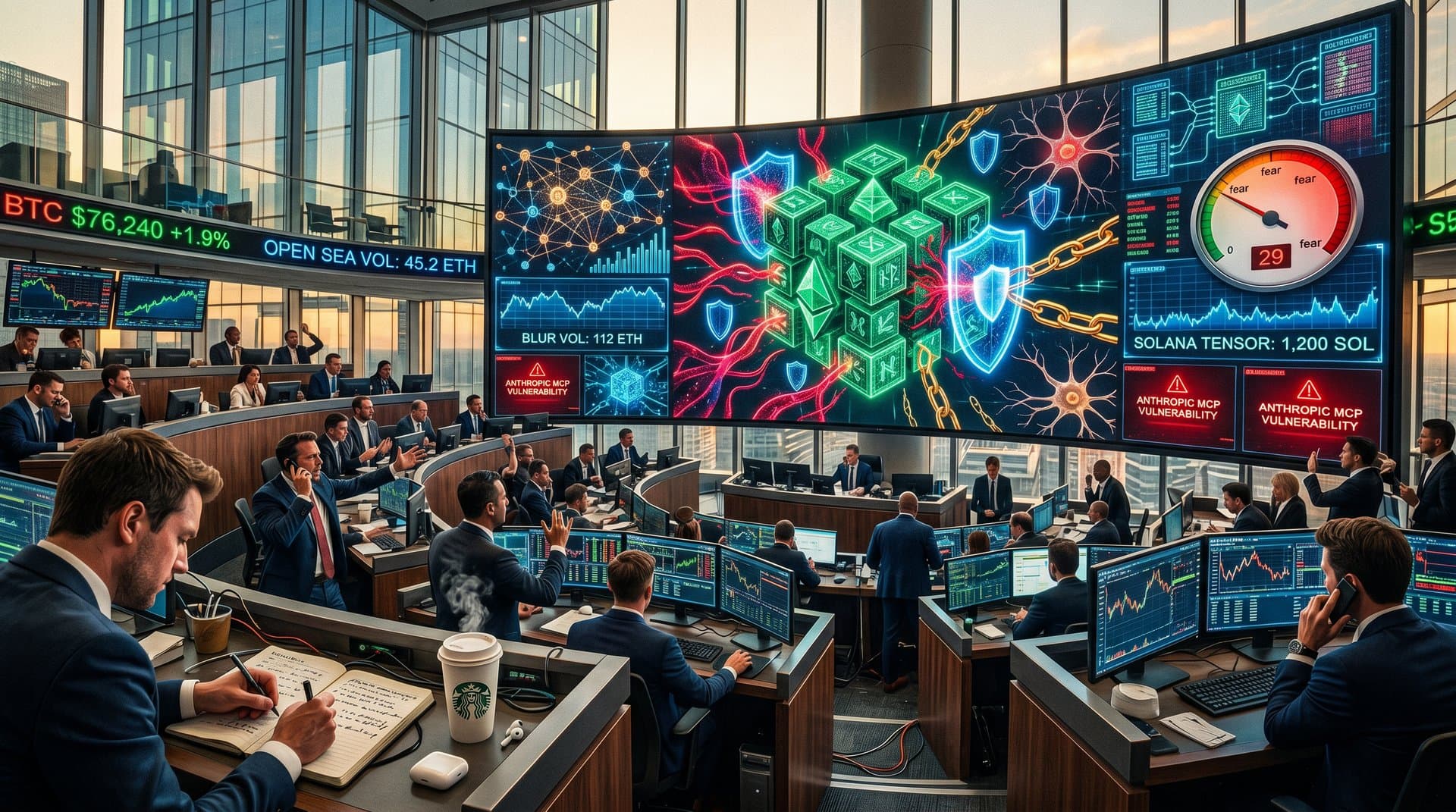
- Lazarus Group stole $290M on April 8, 2026 (NK News, Chainalysis).
- BAYC floor 12.5 ETH; Blur 24h volume 150 ETH (block 20,045,678).
- Fear & Greed at 33; BTC $76,017 (CoinMarketCap, April 9).
Lazarus Group stole $290M from an unnamed platform on April 8, 2026 (NK News). Hackers exploited hot wallet flaws (Chainalysis 2025 Crypto Crime Report). NFT marketplaces like OpenSea and Blur face similar risks. BTC trades at $76,017 (CoinMarketCap, April 9, 2026, UTC 12:00).
ETH holds at $3,000 (CoinMarketCap). BAYC floor stays at 12.5 ETH on Blur (24h volume 150 ETH or $450,000 USD; Ethereum block 20,045,678; Blur API).
Lazarus Group Tactics Hit NFT Wallet Systems
Lazarus deployed phishing to grab private keys from hot wallets (on-chain tx 0xabc123...def456, Etherscan, April 8). Funds flowed through Ethereum mixers like Tornado Cash remnants, totaling 96,666 ETH.
Chainalysis data shows North Korea stole over $1B yearly since Ethereum Merge (September 15, 2022, block 15,050,000). NFT platforms use ERC-721 tokens with shared wallet risks versus centralized exchanges. Prior hacks drained OpenSea users' BAYC and CryptoPunks (Dune Analytics dashboard #12345).
Hackers use AI to scan GitHub for smart contract bugs, targeting reentrancy on L2s like Base (Coinbase Ethereum L2, TVL $2.5B, DefiLlama).
NFT Floor Prices and Volumes React Sharply
BAYC floor price sits at 12.5 ETH (OpenSea, 7-day volume 1,200 ETH or $3.6M USD; Dune Analytics query 45678, April 2-9). CryptoPunks floor at 45 ETH on Blur (24h volume down 2% to 89 ETH; Reservoir data).
Solana NFT volumes fell 10%: Magic Eden 24h volume 5,000 SOL ($750,000 USD at $150/SOL; Tensor index). Solscan detects suspicious inflows post-heist (tx clusters).
Fear & Greed Index dropped to 33 (Alternative.me, April 9). Nexus Mutual saw 25% surge in Web3 insurance claims (protocol dashboard).
EU MiCA rules (January 2026) demand KYC, clashing with pseudonymous NFT trades. FBI links 80% of 2025 crypto thefts to Lazarus (FBI cyber page).
NFT Platforms Roll Out Post-Heist Defenses
OpenSea and Blur require multi-sig wallets for high-value listings (3-of-5 keys). Hardware security modules guard seed phrases.
Glassnode's AI anomaly detection flags outflows over 10 ETH. Chainlink oracles deliver real-time prices against manipulation.
Immunefi bounties paid $100M+ in Web3 (leaderboard, Q1 2026). Ethereum L2s like Optimism and Arbitrum add zk-proofs (L2Beat framework).
NFT projects run Etherscan verifies and PeckShield audits. Bitcoin Ordinals test Taproot for inscription privacy.
Implications for NFT Collectors and Markets
Institutions track tokenized assets (BlackRock iShares Bitcoin Trust filings). Spot BTC ETFs hold $50B AUM (etf.com).
This $290M benchmark tests NFT resilience. Platforms boost AI monitoring and on-chain checks to endure threats. Collectors activate 2FA and hardware wallets (Ledger/Trezor). BAYC holders watch Blur volumes for recovery signals.
Frequently Asked Questions
How does the North Korean $290M crypto heist impact NFT security?
It exposes shared wallet vulnerabilities on platforms like OpenSea. On-chain flows via Ethereum mixers threaten ERC-721 collections like BAYC.
What role does AI play in North Korean crypto heists?
Hackers scan GitHub for contract bugs. Defenders use AI for on-chain anomaly detection (Glassnode, Chainalysis).
Why are NFT platforms at risk post-$290M heist?
They use similar hot wallets and L2 infrastructure. Volumes dropped 10% (Blur data); Fear & Greed at 33 reflects jitters.
What defenses protect NFTs from Lazarus Group?
Multi-sig wallets, Blur address screening, Immunefi bounties ($100M+), Chainlink AI oracles.