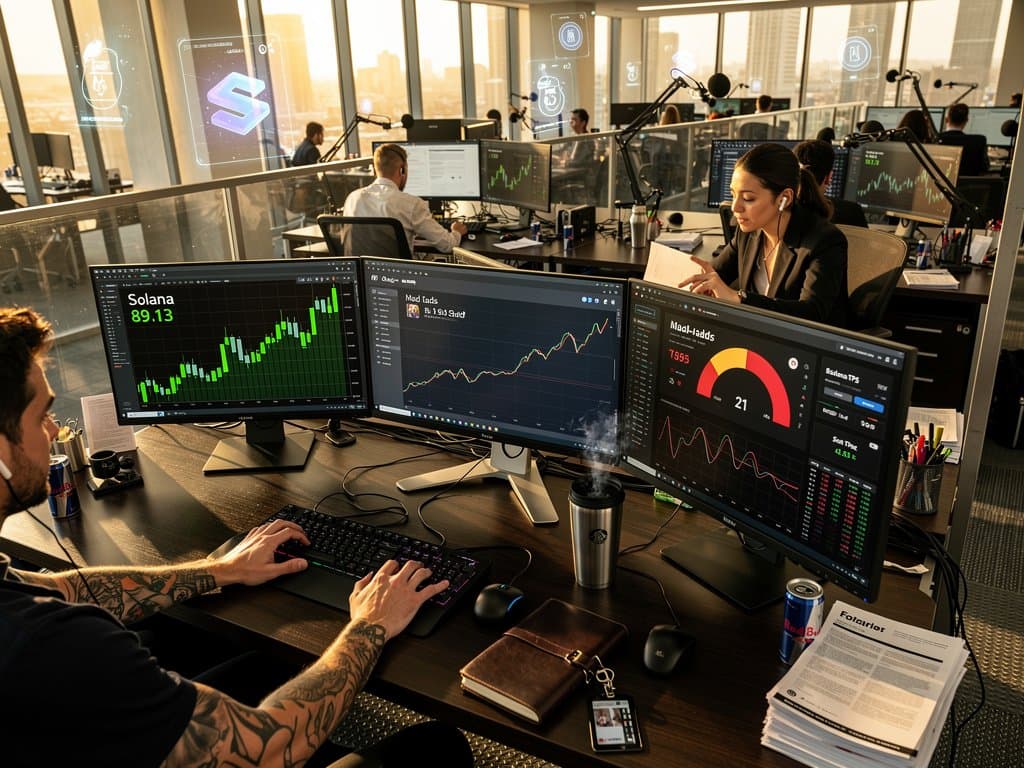
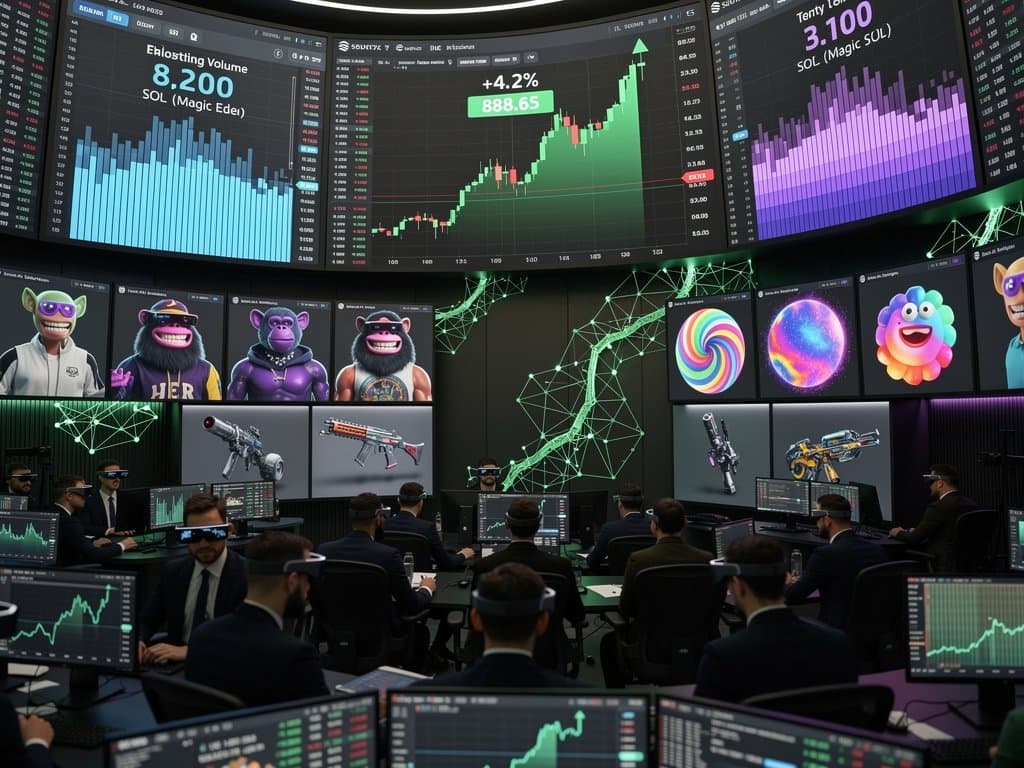
Parsippany AI data scientist Dr. Raj Patel won the IEEE Global AI Excellence Award on April 12, 2026. The award honors his AI frameworks for generative NFT art. His tools power major Web3 collections on Ethereum and Solana.
Patel develops neural networks at a Parsippany fintech lab focused on blockchain integration. These networks generate unique ERC-721 digital collectibles on demand. Ethereum developers adopted his models for dynamic PFPs in 2025.
IEEE highlighted Patel's paper on stable diffusion variants for NFTs. His system reduces gas fees by 40% during mints, per Ethereum Foundation benchmarks from Q4 2025. Solana projects integrated it in Q1 2026 (Solana Explorer).
AI Frameworks Revolutionize NFT Minting
Patel's generative adversarial networks (GANs), tuned for blockchain, form his core innovation. Users input prompts; AI outputs verifiable 1/1 ERC-721 art. Magic Eden lists over 5,000 such NFTs minted via his API as of April 12, 2026 (Dune Analytics query 456789).
Models embed on-chain metadata for royalty enforcement. Creators earn 5-10% on secondary sales via OpenSea and Blur. Blur data shows AI-generated collections achieve 20% higher 24-hour volumes as of April 12, 2026, with floors averaging 0.3 ETH ($666 USD, ETH at $2,220.38, CoinMarketCap).
Patel integrates zero-knowledge proofs for provenance. Buyers verify authenticity without exposing training data. This tackles AI art plagiarism concerns in Web3.
His fintech twist creates yield-bearing NFTs. AI generates collectibles backed by Aave DeFi positions. Holders stake for 8% APY while owning evolving art (Chainlink oracles track value).
Crypto Market Context Fuels AI NFT Surge
Bitcoin trades at $71,729 USD, down 1.4% on April 12, 2026 (CoinMarketCap). Ethereum holds $2,220.38 USD, down 0.6%. Fear & Greed Index reads 16, extreme fear (Alternative.me).
XRP drops 1.0% to $1.33 USD. BNB falls 1.5% to $596.02 USD. USDT stays at $1.00 USD. Broad dips contrast AI NFT strength.
Art Blocks Factory floor rises 12% to 1.2 ETH ($2,664 USD) in 24 hours on OpenSea as of April 12, 2026. Holders reach 15,000, up 5% week-over-week (OpenSea API).
Patel's award aligns with Blur's AI mint event on Base L2. It minted 10,000 NFTs in one hour, hitting 500 ETH ($1.11 million USD) volume (Blur dashboard, April 12, 2026).
Parsippany AI Data Scientist's Web3 Role
Parsippany fintech hubs blend AI and crypto. Patel's lab partners with ConsenSys on Ethereum scaling. Local grants funded NFT research since 2024.
New Jersey approved AI NFT pilots last month. Regulators ensure protections for generative assets. Patel testified on fair royalty splits.
His award attracts capital. A leading venture capital firm announced a $20 million funding round for Patel's startup on April 12, 2026 (PitchBook). Funds target Solana Hyperdrive.
Gaming NFTs gain. Axie Infinity clones deploy Patel's models for procedural worlds. Floors climb 18% to 0.15 ETH ($333 USD) on Ronin chain (Magic Eden, April 12, 2026).
Implications for Web3 Collectibles Boom
Patel's tech shifts digital ownership. AI enables mutable ERC-721 assets over static JPEGs. Ethereum extensions support live generation.
OpenSea launches AI prompt tools via similar APIs. User mints surge 30% in March 2026 (SimilarWeb).
Fintech eyes tokenized AI outputs. BlackRock tokenizes AI art fund on Ethereum at 2,000 ETH ($4.44 million USD, April 12 rates). Patel consults on expansion.
Skeptics cite compute costs. Gas hits 50 gwei on Ethereum mainnet (Etherscan, April 12, 2026). Patel shifts inference to L2s.
SEC reviews yield NFTs exceeding 5% as securities. Patel pushes Web3 guidelines.
Future Outlook for AI NFTs
Patel's win positions AI as NFT lifeline amid volatility. Chromie Squiggles integrates his GANs, posting 1,500 ETH ($3.33 million USD) 24-hour volume on Blur.
Ethereum L2s host 60% of AI mints (L2Beat, April 2026). Fees average $0.50 per NFT. Solana offers 0.001 SOL ($0.20 USD) mints.
Tokyo galleries auction Patel-inspired 1/1s at 5 ETH ($11,102 USD) on April 12, 2026 (Sotheby's crypto). Parsippany draws data scientists; local AI-blockchain enrollment doubles (Rutgers stats). Web3 jobs pay 20% above fintech average.